Collaborative Leadership Programme Now Open to All Working Professionals!
Offered for years at leading IIMs, Indiahikes’ Collaborative Leadership Programme is now open to professionals seeking hands-on leadership development.

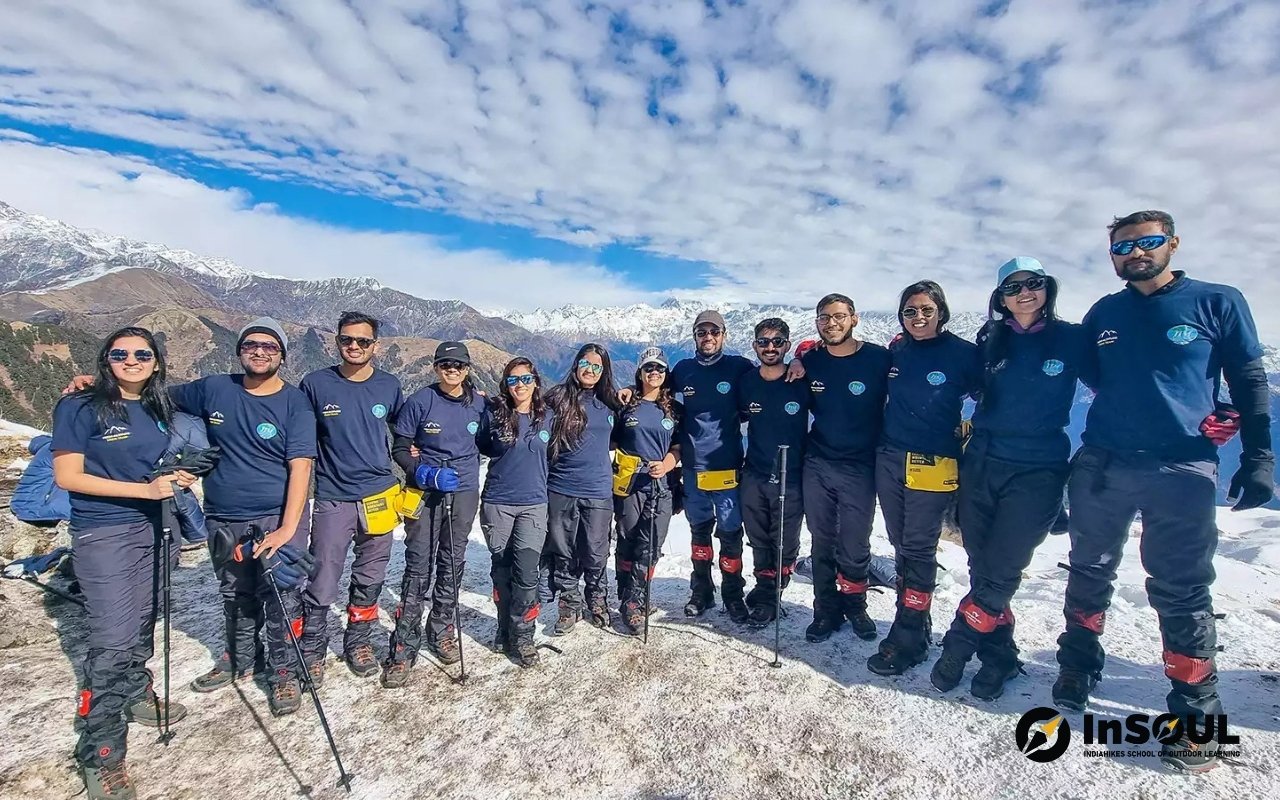
Corporates are slowly realising the effectiveness of trekking as a great team outing alternative.

This is because a trek is not a mere leisure holiday; it is a team undertaking of a fun yet challenging activity. People gain a much better understanding of each other’s skills and personalities. The shared experience of surmounting a challenge with their teammates outside of their workplace fosters such team bonding.
Take what Mr. Vishnuvardhan had to say about his experience on the Nag Tibba trek with his team at HPCL:
“It was a great experience for us. As I mounted the peak, sometimes I slipped, sometimes I was tired. But through all these instances, I learnt to better myself. Instead of blaming the steepness and harshness of the mountain, I adapted myself to the mountain. This is the very essence of life… Earlier, I had different perception about several of my colleagues. But during this trek, my perception changed. I really got connected to several people.”
Mr Vishnuvardhan’s story is the story of many that go trekking with their teams.
The Team Leadership Programme promotes learning and capacity building through experiencing things. After all, one can only increase team productivity by doing team activities. It is a 3-5 day Himalayan expedition that provides corporate teams with a physical and mental challenge.
play video
There are four fundamental points that make trekking a much more enriching and fruitful Team Outing:
A trek in the mountains is nothing like playing badminton at a resort. You are in a completely different landscape, very far away from your comfort zone. And you have a mountain to scale.
It is not something that one can ever be fully prepared for. In the mountains, your body is physically pushed to the limit and your mind is stretched thin.
However, you are not the only person experiencing this physical and mental hardship. Your whole team is going through the same thing. The level of empathy is high.
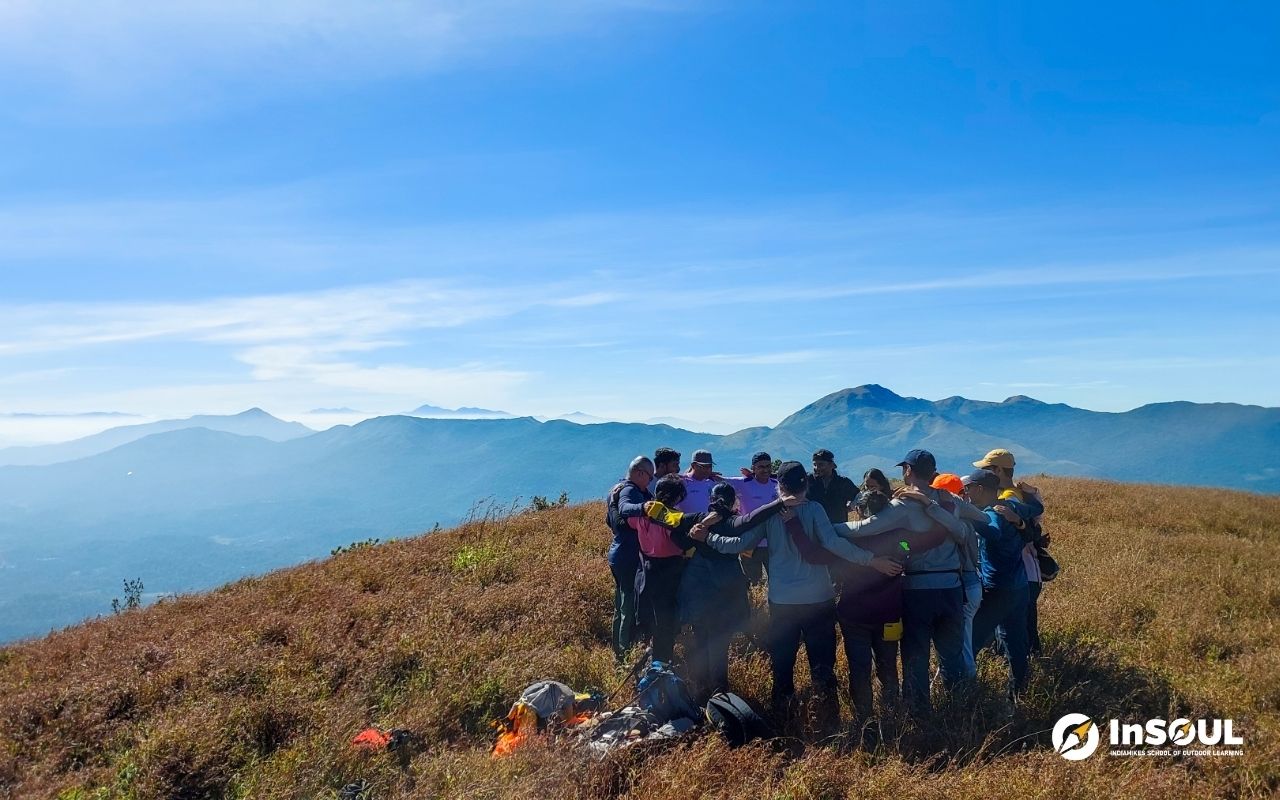
What comes out of this realisation is an innate sense of comradeship. People naturally lean on each other for strength and support. In the process, they foster bonds that would have never been possible through any other leisure activity.

A trek forces you to step out of your comfort zone and be in the company of a limited number of people over the next few days. Photo by Ruchit Dhumavat on the Kedarkantha trek.
A trek is a massive undertaking and lasts multiple days. You are forced to go through the highs and lows of trekking with the same group of people. You eat with them, brush your teeth with them, you guard each other’s toilet tents, you conquer the summit with them.
The very span of a trek plays a very important role in making it an effective team building exercise. The extended period of time allows you to build trust as you face difficulties and share small moments of chatter and laughter together. You get to know about your colleague’s skills and personalities, which you may have never otherwise discovered at your workplace or an overnight stay in a resort.
.jpg)
Let’s take the example of a regular team outing. After spending time playing some games that only a handful are interested in, people return to their groups and spend the night talking loudly till they all pass out with exhaustion. Other than the fact that you are not sitting inside an office, no one really gains much out of this weekend happens here.
On the other hand, on a trek, every day and every hour is planned, scheduled and executed to a T. Even free time has a specific time dedicated to it. Being an organised event, every member of the expedition works in unison with the others. You interact with people outside of your clique and get to know people who were only familiar by face earlier. This is essential for building a valuable team.
“I joined this office five months ago. After this (trek) experience, I came to know a lot of people from my office. Previously, I was not even aware of their names. Today I came to know their names as we helped each other and I’m sure our relationship will get better.” Dev Shankar, Fitkids
_kedarkantha_2022_%2B(80).jpg)
All Team Leadership Programmes are conducted out in a completely natural surrounding, far away from the office noise and corporate boardrooms. There’s no mobile network, no internet, no electricity. This brings about a mental and physical disconnect from your usual work life.
Nature induces people to be themselves. The sights and sounds of the mighty mountains are a stimulation to all of your senses. You let down your facade and are no longer inhibited by work dynamics or office behaviour. As casual conversations flow, people get to know each other and relationships are built and the same is carried over to your work life.
So what it comes down to is what you want to achieve out of your team outing. Would you rather make the outing an investment into increasing the work capacity of your employees?
Through the Team Leadership Programme, you discover the character traits of your colleagues. You find out who the patient one is, who the enthusiastic learner is, the innovative, the humble, the problem solver, the natural leader… But this learning only comes through overcoming hardships. It certainly is not a relaxing weekend, but you get to carry valuable learnings from the mountains back to the office to build a better, more productive team.